
MONEY LAUNDERING –
Money laundering refers to the process of making illegally obtained or “dirty” money appear legitimate or “clean” by passing it through a complex series of transactions or financial activities. The term “money laundering” originated from the idea of making illicit proceeds, such as those from drug trafficking or corruption, seem like they came from legal sources.
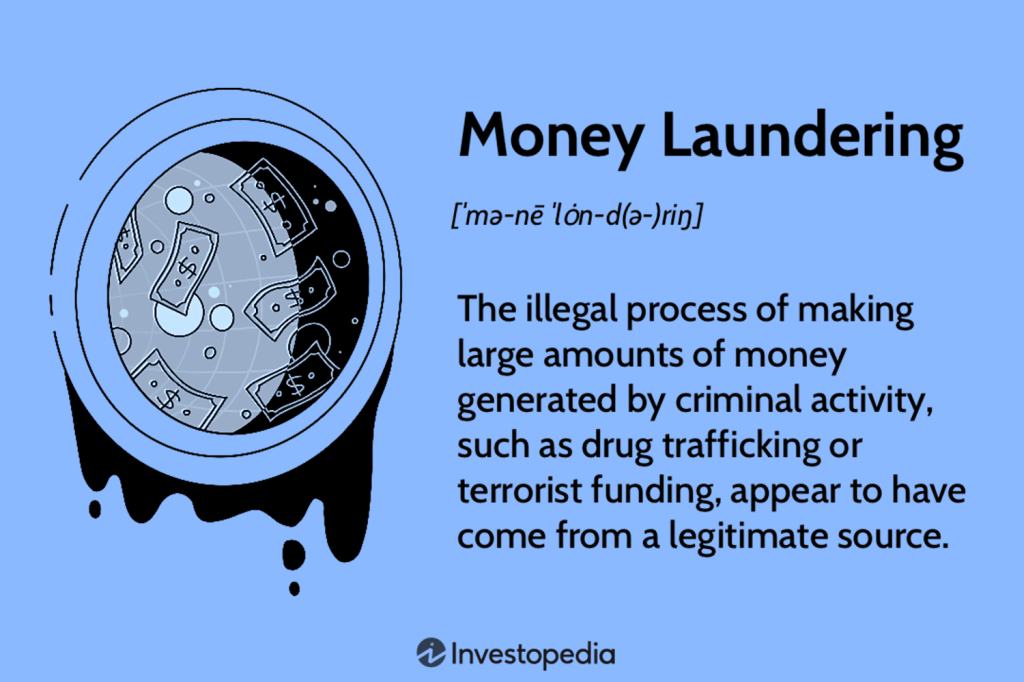
The main purpose of money laundering is to disguise the origins of the funds, making it difficult for law enforcement agencies to trace the money back to its illegal source. This allows individuals or criminal organizations to integrate illicit funds into the legitimate economy, enabling them to enjoy the profits without arousing suspicion.
Money laundering typically involves three stages:
Placement: The process begins with the placement stage, where the illicit funds are introduced into the financial system. This can be done through various means, such as depositing cash into bank accounts, purchasing assets like property or businesses, or using the funds for gambling.

Layering: In this stage, the launderer engages in multiple complex transactions to obscure the trail of the illicit funds. They may transfer money between various accounts, conduct numerous financial transactions, or move funds across different countries or financial institutions. Layering aims to create a web of transactions that makes it challenging for authorities to trace the original source of the money.
Integration: The final stage involves integrating the laundered funds back into the legitimate economy. At this point, the money appears to have originated from legal activities. The launderer can use the funds for personal expenses, invest in legal businesses or assets, or simply merge the money with legitimate funds in a way that makes it difficult to differentiate between clean and dirty money.
ANTI MONEY LAUNDERING –
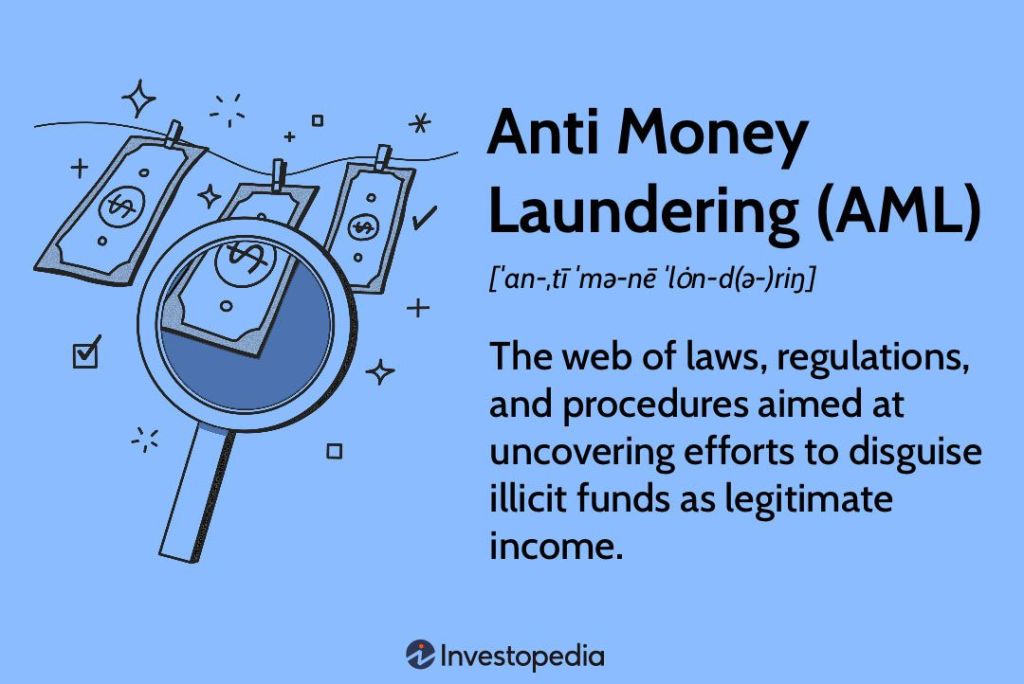
Anti-money laundering (AML) refers to a set of laws, regulations, and procedures designed to prevent the illegal generation, movement, and utilization of funds obtained through criminal activities. The primary objective of AML measures is to detect and deter money laundering, which involves disguising the origins of illicitly obtained money and integrating it into the legitimate financial system.
AML measures typically involve the following key elements:
1:Customer Due Diligence (CDD): Financial institutions are required to verify the identity of their customers and assess the risks associated with their transactions.
2:Know Your Customer (KYC): Institutions gather relevant information about their customers, such as identification documents, to establish their identity and evaluate their risk profile.
3:Transaction Monitoring: Financial institutions use automated systems to monitor customer transactions for any suspicious or unusual activities that may warrant further investigation.
4:Suspicious Activity Reporting (SAR): If financial institutions identify any suspicious transactions, they are obligated to report them to the appropriate authorities, such as financial intelligence units, who then investigate the matter.
5:Compliance Programs: Institutions establish comprehensive AML compliance programs to ensure adherence to regulations and provide training to employees.
6:Regulatory Oversight: Governments and regulatory bodies supervise financial institutions and enforce AML regulations to ensure compliance and deter money laundering activities.
AML laws and regulations vary between jurisdictions but are often based on international standards and guidelines established by organizations such as the Financial Action Task Force (FATF). Non-compliance with AML regulations can result in severe penalties for financial institutions, including fines, loss of license, and reputational damage.
By implementing AML measures, countries aim to combat money laundering, disrupt criminal networks, safeguard the integrity of the financial system, and deter illicit activities such as terrorism financing, drug trafficking, corruption, and organized crime.
 Site Title