In finance a derivative is a financial instrument or contract that derives its value from an underlying asset. The underlying asset can be a stock, bond, commodity, currency, interest rate, or even an index.
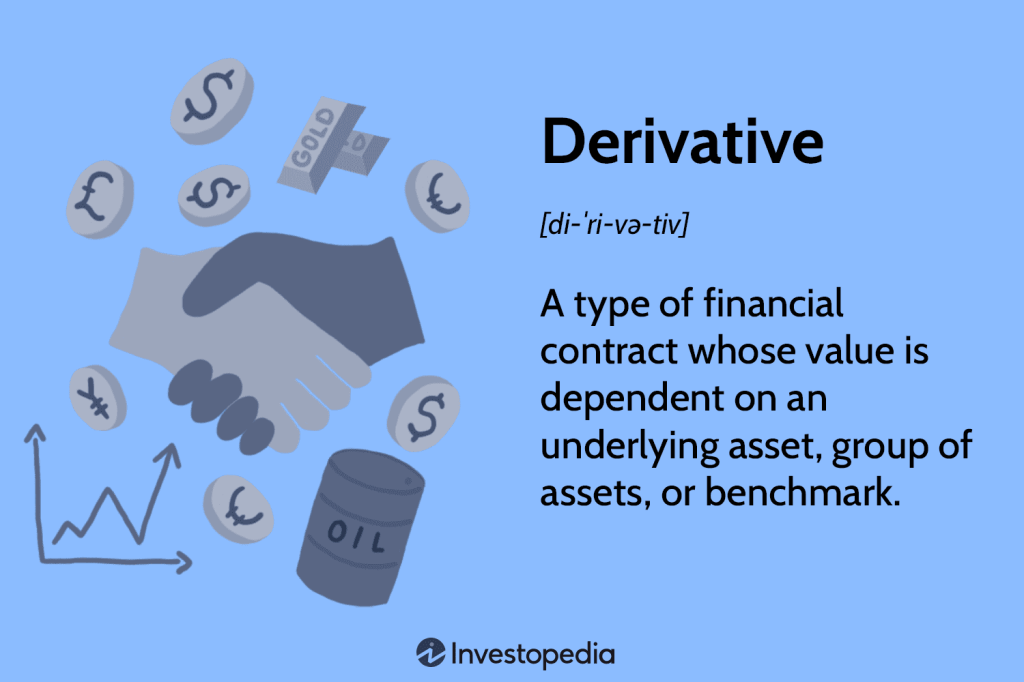
Derivatives are used for various purposes, including hedging against risks, speculating on price movements, or gaining exposure to an asset without owning it directly. The value of a derivative is derived from the fluctuations in the price of the underlying asset.
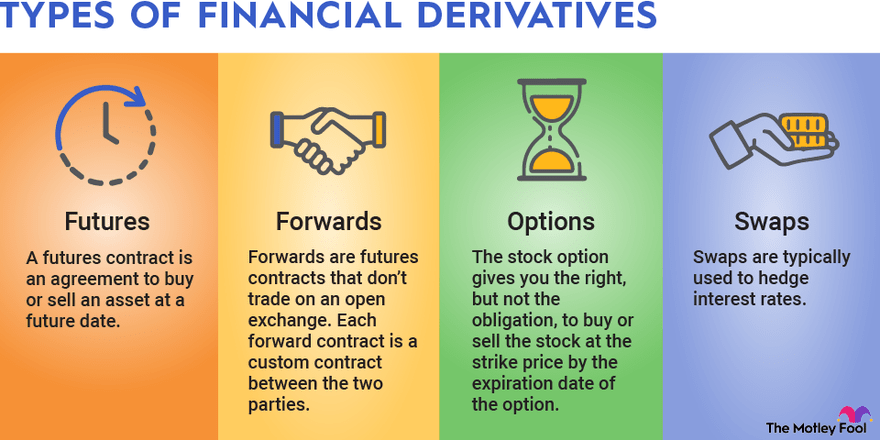
Common types of derivatives include options, futures contracts, forwards, and swaps. Here’s a brief explanation of each:
1:Futures Contracts: A futures contract is an agreement to buy or sell an asset at a predetermined price on a specified future date. It obligates both parties to fulfill the contract at the agreed-upon terms.
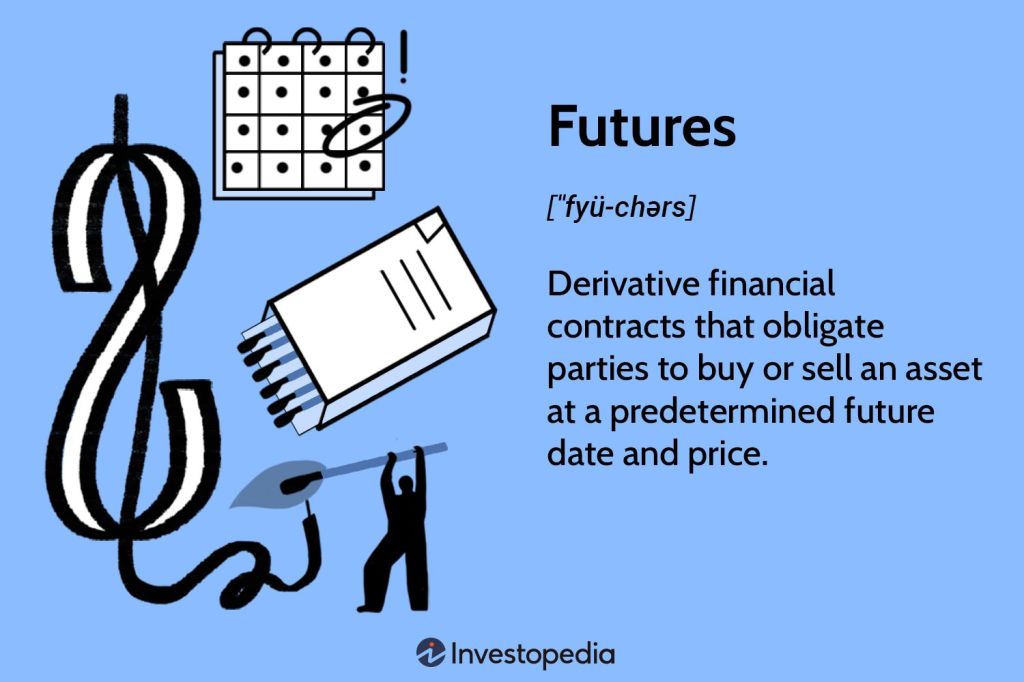
Here’s an example of a derivatives future:
Let’s say you are a wheat farmer and you’re concerned about the future price of wheat. To protect yourself against potential losses due to a decrease in wheat prices, you decide to enter into a futures contract.
You enter into a wheat futures contract with a delivery date three months from now. The contract specifies that you will sell 1,000 bushels of wheat at a price of $5 per bushel at the end of the three-month period.
At the time of entering into the futures contract, the current market price of wheat is $6 per bushel. By entering into this futures contract, you are essentially locking in a selling price of $5 per bushel, regardless of whether the market price of wheat goes up or down in the next three months.
Now, let’s consider two scenarios:
Scenario 1: At the end of the three-month period, the market price of wheat has dropped to $4 per bushel. In this case, you would have made a wise decision to enter into the futures contract because you are still able to sell your 1,000 bushels of wheat at the agreed price of $5 per bushel. You would avoid the loss of selling at the lower market price of $4 per bushel, and the futures contract would have helped protect your profits.
Scenario 2: At the end of the three-month period, the market price of wheat has increased to $7 per bushel. In this case, you would not be able to take advantage of the higher market price because you are obligated to sell your 1,000 bushels of wheat at the lower agreed price of $5 per bushel. However, you would not incur a loss since the futures contract protected you from selling at an even lower market price.
By participating in a wheat futures contract, you are effectively hedging against potential price fluctuations, minimizing your risk exposure, and ensuring a certain level of price certainty for your wheat produce. Futures contracts are widely used in commodities trading to manage price risk and provide stability for producers, consumers, and investors alike.
2:Forwards: Similar to futures contracts, forwards are agreements to buy or sell an asset at a predetermined price on a specified future date. However, forwards are typically customized contracts between two parties, whereas futures contracts are standardized and traded on exchanges.
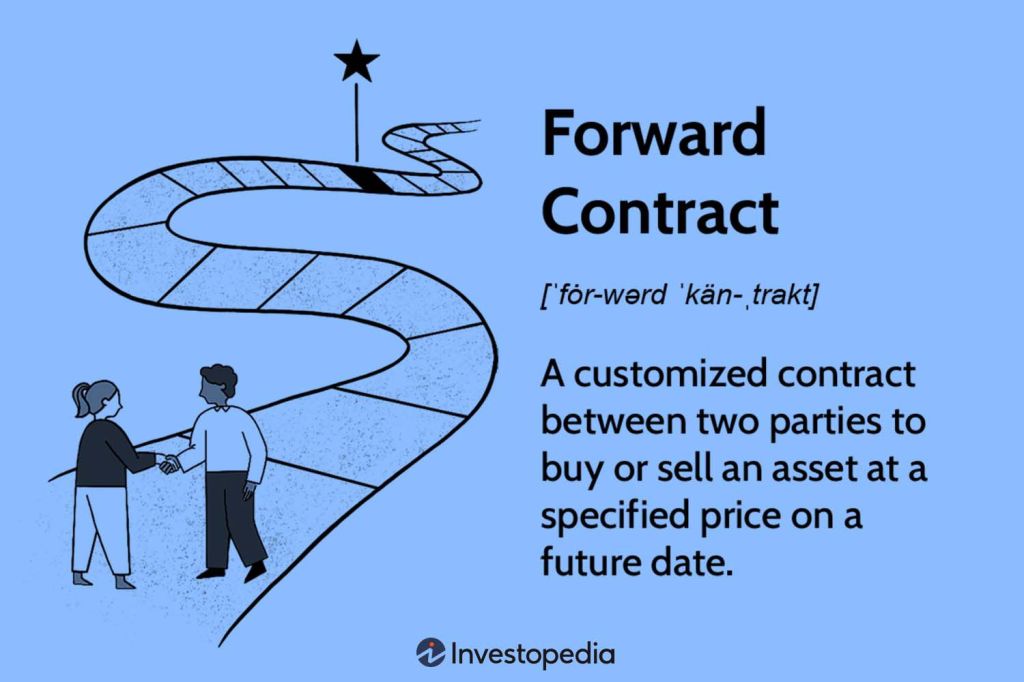
Here’s an example of a derivative forward contract:
Let’s say you are a farmer and you expect to harvest 1,000 bushels of corn in three months. You are concerned about the fluctuating price of corn in the market and want to protect yourself against potential price decreases. To hedge your risk, you enter into a derivative forward contract with a corn buyer.
In the contract, you agree to sell 1,000 bushels of corn to the buyer in three months at a predetermined price of $5 per bushel. This means that regardless of the actual market price of corn at the time of the delivery, you are obligated to sell your corn at $5 per bushel.
If the market price of corn increases to $6 per bushel by the time of delivery, you will still sell your corn at $5 per bushel as per the contract. In this case, you would have benefited from the derivative forward contract because you locked in a higher price.
On the other hand, if the market price of corn decreases to $4 per bushel by the time of delivery, you would still sell your corn at $5 per bushel. In this scenario, the derivative forward contract would have protected you from potential losses.
Derivative forward contracts allow individuals or businesses to mitigate their exposure to price fluctuations by agreeing to buy or sell an asset at a predetermined price in the future.
3:Options: An option gives the holder the right, but not the obligation, to buy (call option) or sell (put option) an underlying asset at a predetermined price within a specific time frame.
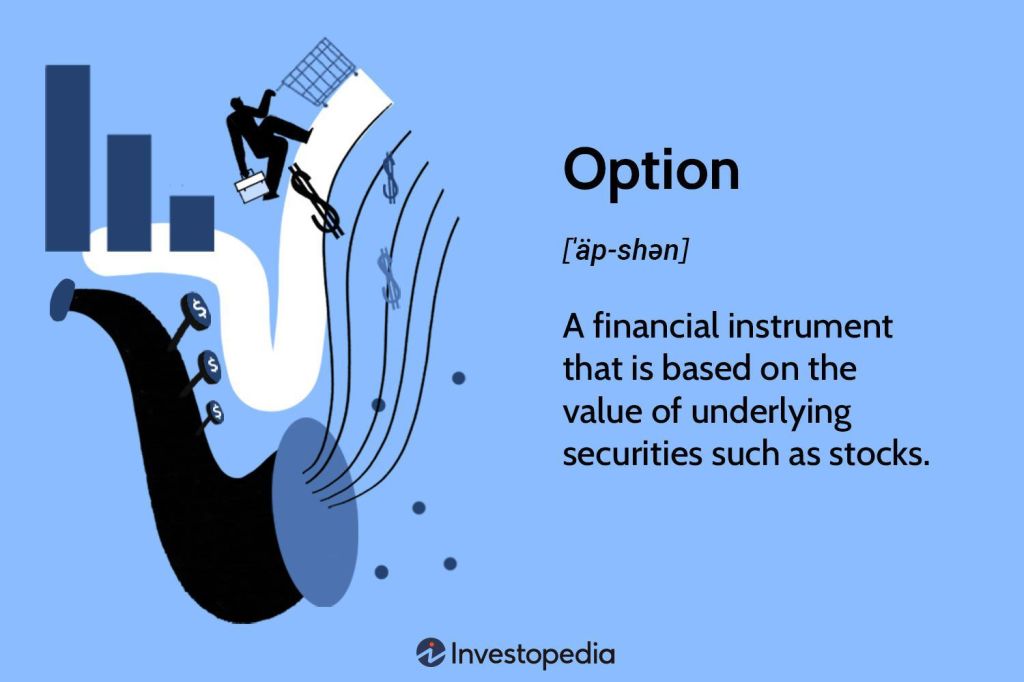
Here is an example:-
Let’s consider a fictional scenario involving derivatives options.
Suppose you are an investor who holds 100 shares of a technology company called XYZ Inc. The current market price of each share is $50. However, you are concerned that the stock price might decline in the next three months due to some uncertainties in the market.
To protect yourself from potential losses, you decide to purchase a put option on XYZ Inc. stock. A put option gives you the right, but not the obligation, to sell the underlying asset (in this case, the XYZ Inc. stock) at a predetermined price, known as the strike price, within a specified time frame.
You find a put option contract for XYZ Inc. with a strike price of $45 and an expiration date three months from now. The premium (price) for this option contract is $3 per share.
By buying this put option, you are essentially paying $3 per share to have the right to sell your XYZ Inc. stock at $45 per share within the next three months, regardless of its actual market price at that time.
Here’s how the scenario can play out based on different stock price movements:
If the stock price of XYZ Inc. drops below $45 within the next three months: In this case, you can exercise your put option and sell your 100 shares of XYZ Inc. stock at the higher strike price of $45 per share. This allows you to limit your losses, as you are selling the stock at a higher price than the current market price.
If the stock price of XYZ Inc. remains above $45 within the next three months: In this situation, you don’t need to exercise your put option since it wouldn’t be beneficial. You would simply let the option expire, and your loss would be limited to the premium paid for the put option ($3 per share), which acted as insurance against a potential decline in the stock price.
By purchasing the put option, you have effectively created a safeguard against potential losses in the value of your stock holdings. If the stock price goes down, the put option becomes more valuable, and you can use it to protect your investment.
Keep in mind that this is a simplified example, and there are various factors, such as time decay, volatility, and market conditions, that can affect the pricing and profitability of options contracts. It’s important to thoroughly understand the risks and mechanics of derivatives options before engaging in options trading.
4:Swaps: Swaps involve the exchange of cash flows or financial instruments between two parties. The most common type is an interest rate swap, where parties exchange fixed and floating interest rate payments.
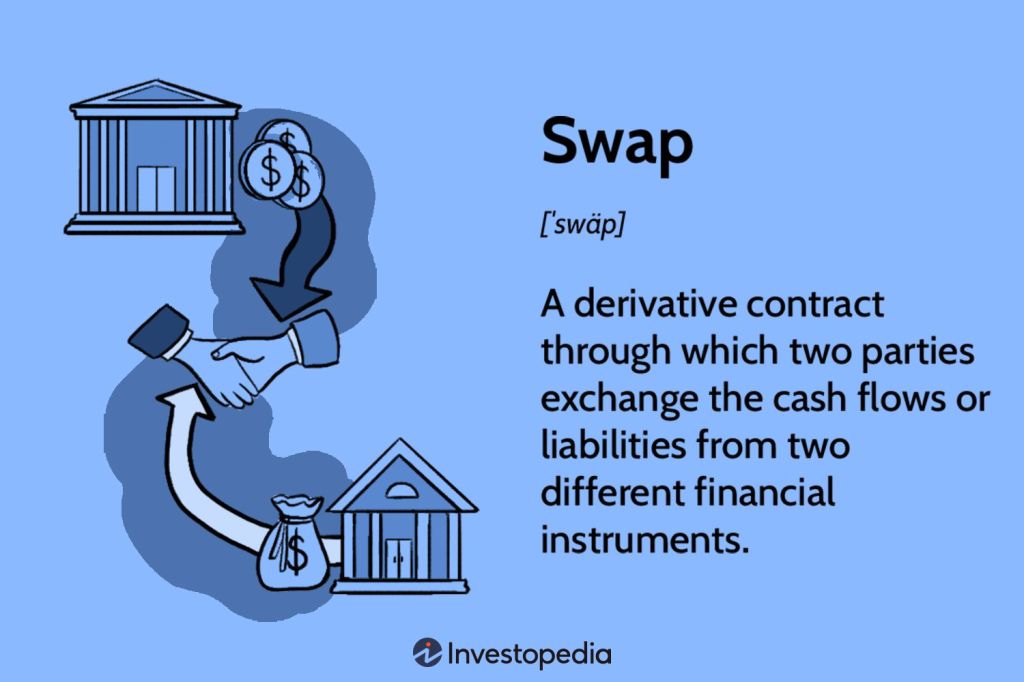
Here are some examples of swap derivatives:
1:Interest Rate Swap: In an interest rate swap, two parties agree to exchange interest payments on a specified notional principal amount. For example, one party may agree to pay a fixed interest rate while receiving a floating interest rate based on a reference rate such as LIBOR (London Interbank Offered Rate).
2:Currency Swap: A currency swap involves the exchange of principal and interest payments denominated in different currencies. This allows participants to manage currency risk and obtain funding in a different currency. For instance, a company based in the United States might enter into a currency swap with a European company to obtain euros for a specific period.
3:Credit Default Swap (CDS): A credit default swap is a contract in which one party pays periodic premiums to another party in exchange for protection against the default of a particular debt instrument or reference entity. If a default occurs, the protection seller compensates the protection buyer for the loss incurred.
4:Equity Swap: An equity swap involves the exchange of future cash flows based on the performance of an underlying stock or equity index. It allows investors to gain exposure to the price movements of a particular stock or index without actually owning the underlying asset.
Derivatives can be complex and carry risks. They require an understanding of the underlying asset, market conditions, and the potential for significant gains or losses. As such, they are primarily used by investors, traders, financial institutions, and corporations with specific risk management needs.
 Site Title